Denver Metro Emergency Roofing Service Areas
Comprehensive 24/7 telephone-to-crew emergency dispatch across Denver, Jefferson, Arapahoe, and Douglas Counties. Connecting Front Range homeowners with vetted, licensed local Colorado roofing contractors.
Front Range Severe Storm Coverage & Municipal Jurisdiction Map
Denver Emergency Roofing & Storm Damage provides rapid telephone dispatch coordination spanning all primary municipalities across the Denver metropolitan basin. When severe convective thunderstorms descend from the Continental Divide or track upward along the South Platte corridor, our network routes vetted, licensed local Colorado contractors equipped for immediate tarping, FLIR thermal moisture tracing, and forensic insurance documentation.
Denver (City & County)
Downtown high-rises, historic Washington Park bungalows, Highlands craftsman homes, and Stapleton/Central Park modern developments. Permitted through Denver CPD.
Denver Metro Hub →Lakewood (Jefferson County)
Foothill microburst exposure, Bear Creek hail corridors, Belmar developments, and Green Mountain residential communities. Permitted through Lakewood Building Division.
Lakewood Hub →Littleton (Arapahoe/Douglas)
South Platte River hail track, historic Downtown Littleton shake conversions, Ken Caryl foothill residences, and Columbine Valley estates.
Littleton Hub →Centennial (Arapahoe County)
Sprawling custom suburban homes, Southglenn neighborhoods, Smoky Hill hail corridors, and Willow Creek architectural shingle triages.
Centennial Hub →Highlands Ranch (Douglas County)
High-elevation ridge lines (5,800+ ft), intense UV exposure, Wildcat Ridge hail damage, and Class 4 impact shingle upgrades per Douglas County codes.
Highlands Ranch Hub →Arvada & Westminster
Northwest Front Range hail tracks, Standley Lake wind shear, historic Olde Town Arvada properties, and Westminster commercial flat roofs.
Dispatched via Central DeskMunicipal Building Permitting Standards Across Front Range Jurisdictions
Because Colorado does not maintain a statewide roofing regulatory board or unified state contractor license, contractor licensing, surety bonding, trade competency testing, and building permit compliance are strictly enforced at the municipal and county levels. Independent roofing contractors dispatched through our central desk hold active licenses, liability insurance policies, and local registrations across all primary Front Range building departments:
- City & County of Denver (CPD): Requires Class A, B, or C roofing contractor licenses registered through Denver Community Planning and Development. Permits must be acquired before commencing work, with mandatory inspections covering wood deck sound decking verification, ice barrier compliance, and final flashing tie-ins.
- Jefferson County (Lakewood, Golden, Wheat Ridge): Mandates compliance with Jefferson County Building Safety Division rules. Due to steep foothills typography, designs must withstand wind loads from 115 to 140 MPH 3-second gusts, with Class A fire ratings mandatory under Wildland-Urban Interface (WUI) codes.
- Arapahoe County (Centennial, Littleton, Aurora): Enforces the 2021 International Residential Code (IRC) with local amendments requiring self-adhering ice-and-water membranes extending 24 inches past heated interior walls, drip edge at eaves and rakes, and strict prohibition of more than two roof layers.
- Douglas County (Highlands Ranch, Parker, Castle Rock): Regulated by Douglas County Building Division. Given average elevations exceeding 5,800 to 6,200 feet, installations must incorporate enhanced UV-resistant synthetic underlayments, heavy-gauge valley flashings, and Class 4 impact-resistant shingles recommended for insurance resilience.
Front Range Orographic Microclimates & Severe Storm Dynamics
The Denver metropolitan area sits in a unique geographic bowl bordered by the Rocky Mountain foothills to the west and the high plains to the east. This complex topography creates hyper-localized microclimates where weather conditions can vary drastically across just five to ten miles:
Palmer Divide Convective Lift
Rising southern terrain creates intense atmospheric shear, generating supercells that drop golf-ball to baseball sized hail across Highlands Ranch, Centennial, and Littleton.
Foothill Chinook & Bora Winds
Downslope mountain windstorms in Lakewood and Golden generate straight-line gusts exceeding 85 to 100 MPH, tearing unsealed shingle tabs and lifting flashing assemblies.
High-Elevation UV Solar Degradation
At 5,280+ feet, thinner atmosphere allows 25% more ultraviolet radiation to bombard roof coverings, causing premature asphalt binder embrittlement and thermal granule shedding.
Diurnal Freeze-Thaw Thermal Shock
Denver frequently experiences 45-degree temperature swings in under 12 hours. Rapid cycles cause structural expansion and contraction, breaking mastic seals and driving ice dam formation.
Rapid 4-Stage Emergency Dispatch Protocol Across Denver Metro
When an extreme weather event strikes, property owners require immediate, organized response rather than navigating answering services or filling out unmonitored digital web forms. Our streamlined telephone triage methodology guarantees swift containment:
- Immediate Live Telephone Intake: Connect instantly with an intake specialist who records property coordinates, architectural style, roofing material, and severity of interior water ingress.
- Geographic Crew Routing: Our proprietary dispatch desk queries regional contractor availability across Denver, Lakewood, Littleton, Centennial, or Douglas County to route the nearest on-call licensed crew.
- Mechanical Waterstop & Tarping: Crews deploy commercial-grade 10-mil woven poly tarps secured with 2x4 lumber battens and mechanical fasteners over sound structural rafters, completely sealing exposed decking against rainfall and driving snow.
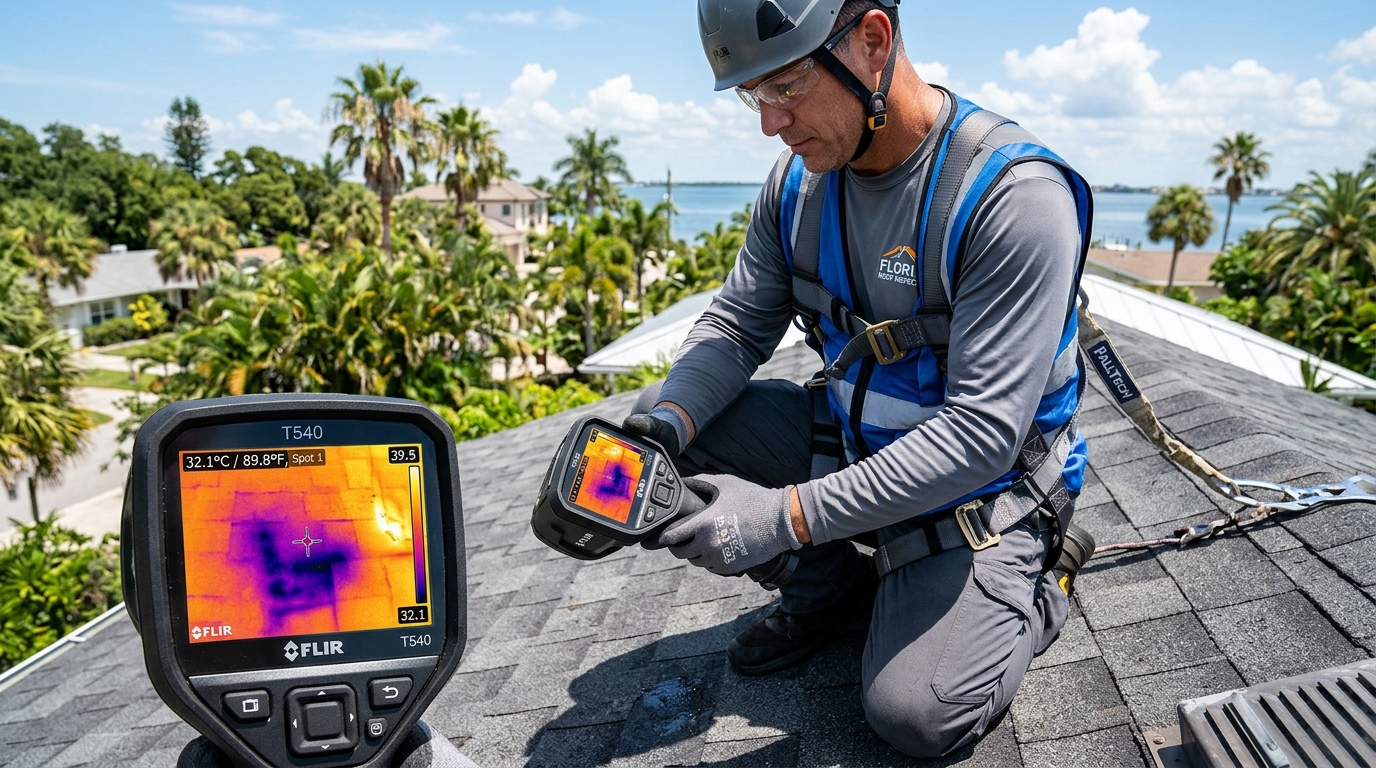
- Non-Destructive FLIR Scoping & Reporting: High-resolution thermal cameras pinpoint concealed moisture paths within attics, drywall ceilings, and insulation bays, compiling forensic proof for insurance loss verification.
Need Emergency Roofing Assistance in Denver Metro?
Zero web forms, zero automated delays. Speak directly with a live dispatch intake coordinator to route vetted, licensed local roofing crews to your property.
CALL 24/7 DISPATCH: (888) 208-4155 CALL NOW: (888) 208-4155